
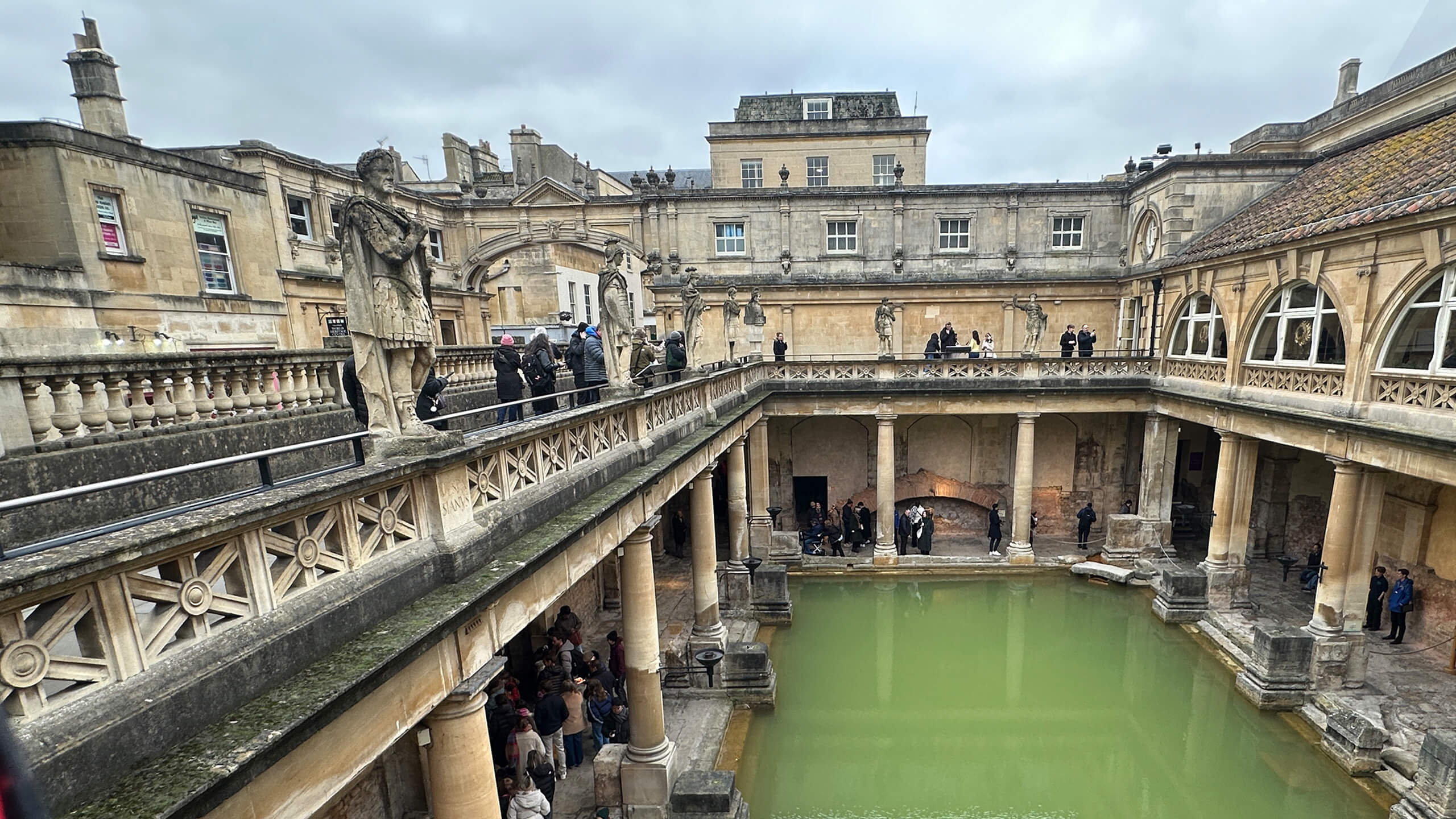
The sign at the entrance to the Roman Baths in Bath asks visitors to refrain from touching the water. This is a reasonable request, given that it is technically a UNESCO World Heritage site and a sacred spring that has been flowing continuously for approximately ten thousand years. What the sign does not mention is that the water is also a luminous, otherworldly shade of green — the kind of green that makes you feel simultaneously that you are looking at something ancient and holy, and that you have wandered into a place where time has simply decided not to apply.
My wife took a photograph. My daughter, thirteen and constitutionally opposed to being impressed by things on family outings, admitted it was “actually quite cool.” High praise.
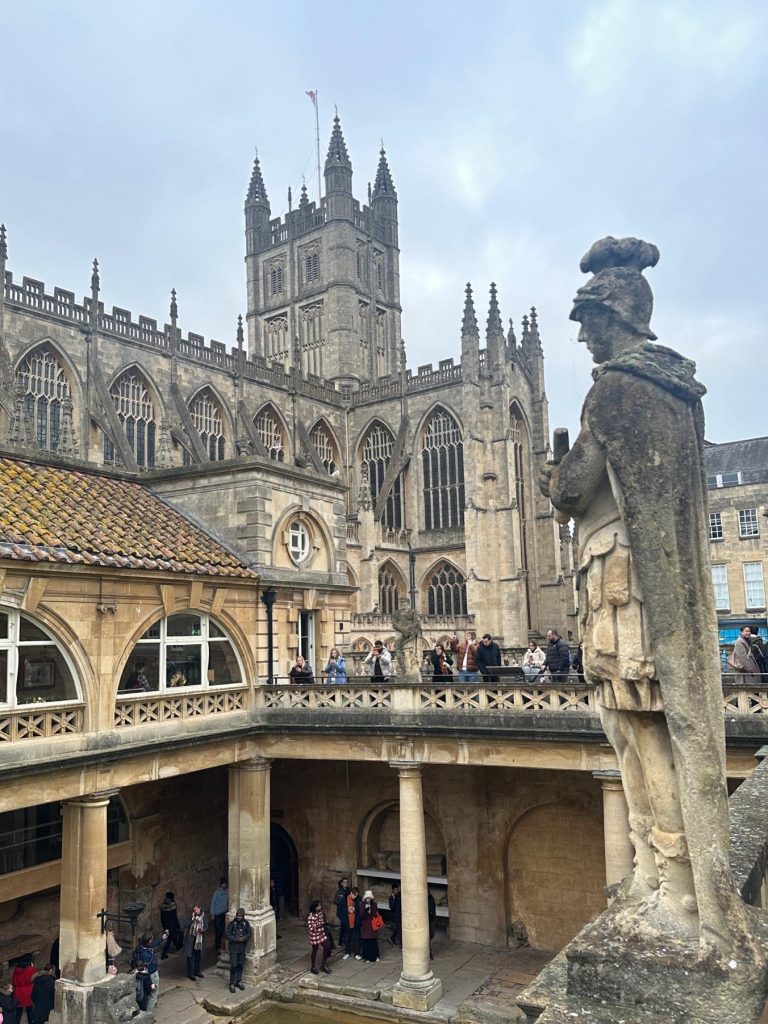
We had come down from London for the day — a journey of ninety minutes on a Great Western train from Paddington that deposits you directly into one of the most improbably well-preserved Georgian cities in England. Bath is the sort of place that makes you feel underdressed simply by existing. The honey-coloured limestone buildings, the sweeping crescents, the abbey looming over everything like a very elegant form of architectural supervision. It is beautiful in the way that occasionally tips into self-conscious, the way a person is beautiful when they know it.
But it is not the Georgian city that brought me here. It is what is underneath it.
Two Thousand Years of Getting It Right
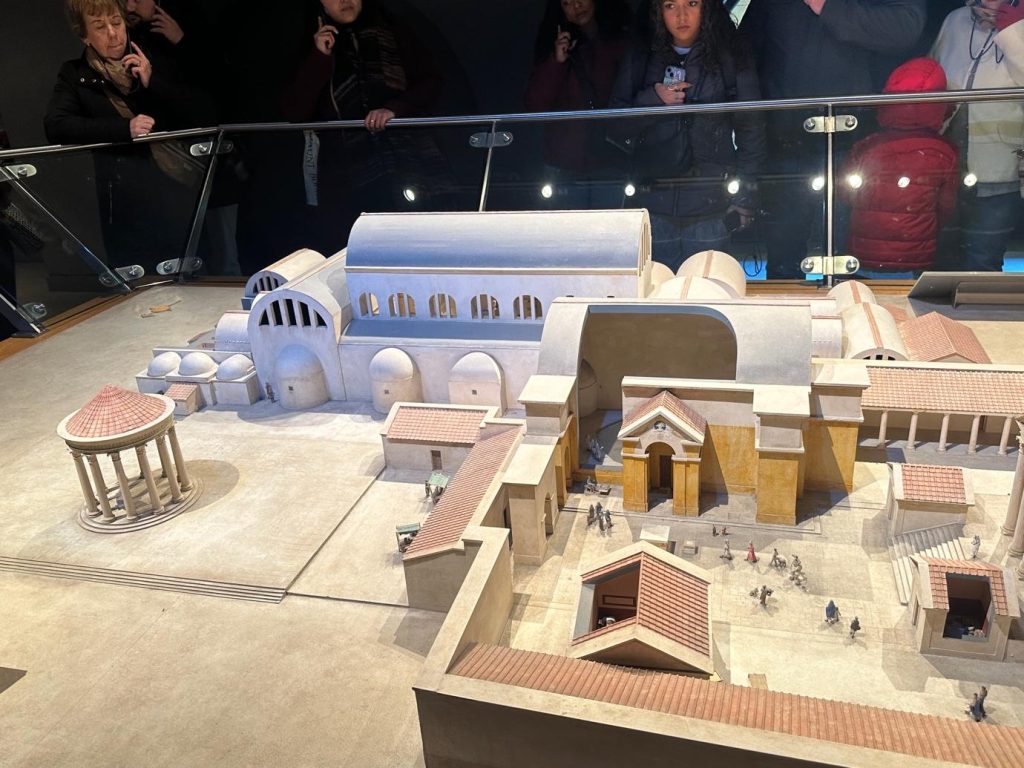
The Roman Baths were built around a sacred hot spring between 60 and 70 AD, in the first decades of Roman Britain, and the complex was gradually expanded over the following three hundred years. The spring itself is considerably older — the water falling as rain on the Mendip Hills some ten thousand years ago, sinking slowly through limestone, heated geothermally deep in the earth, and rising here at a steady 45 degrees Celsius, a quarter of a million litres of it every single day, whether or not anyone is paying the entrance fee.
The pre-Roman Celts knew about it, of course. They called the presiding goddess Sulis. The Romans arrived, took one look at a natural hot spring in the middle of Britain, and did what Romans always did with things they found useful: they improved them enormously, named a goddess after them, and built something extraordinary. They called the site Aquae Sulis — the waters of Sulis — and created a spa that became famous throughout the Roman world, gradually enlarging the complex to accommodate the pilgrims who travelled from afar.
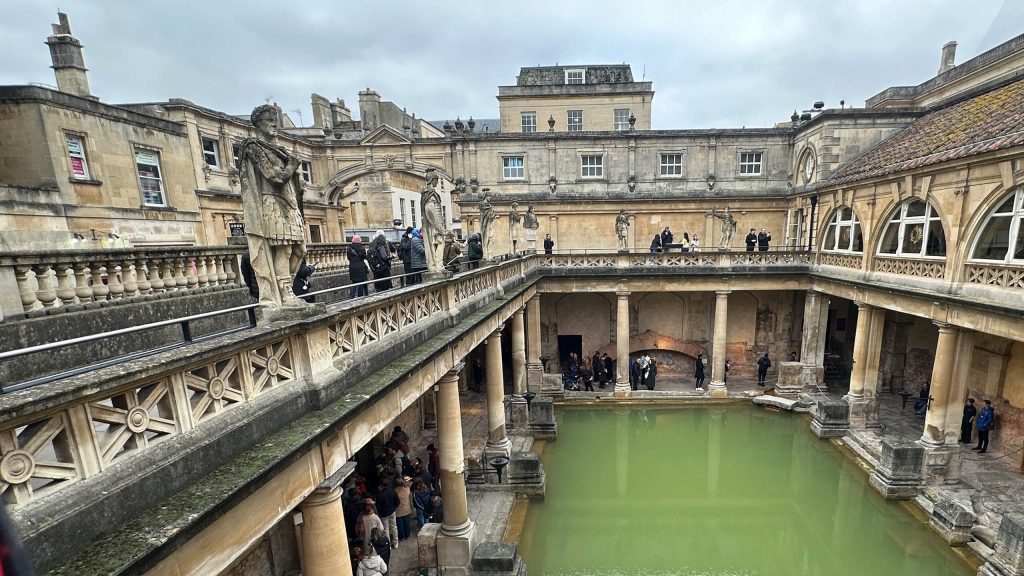
Now we stand on a viewing platform above the Great Bath itself, looking down at that extraordinary green water, steaming gently in the Somerset morning, and I find myself doing the calculation that travel always eventually forces upon you: the one where you realise that the thing we think of as new is, in fact, ancient; that human beings have always understood, at some deep intuitive level, what the body needs — and that we are only now, armed with scientific language and peer-reviewed journals, catching up to what the Romans already knew.
The Circuit
Roman bathing was based around the practice of moving through a series of heated rooms, culminating in a cold plunge at the end. This sounds simple. It was, in execution, a masterpiece of engineering, social design, and what we would now call holistic wellness — delivered at civic scale, two millennia before anyone had invented the terminology.
The sequence began in the apodyterium — the changing room, where you handed your clothes to a slave and prepared yourself for what was coming. From there, you moved into the tepidarium, the warm room, a thermal antechamber that eased the body gently into the sequence ahead. Then the caldarium — the hot room, closest to the furnace, with floors so hot that bathers wore wooden-soled shoes to protect their feet.
Here, after sweating comprehensively, you were anointed with oil and then scraped down with a curved metal instrument called a strigil — the Roman equivalent of exfoliation, performing the dual function of cleanser and moisturiser with admirable efficiency. The Romans understood, without benefit of a dermatologist, that the skin responds well to heat, oil, and mechanical stimulation. They had arrived at this knowledge through observation and tradition, passed down through generations of lived experience.
Then came what any current wellness practitioner would immediately recognise: the cold plunge. The frigidarium. A cold plunge bath was a feature of many Roman bath houses, but rarely on this scale — 1.6 metres deep, with an underwater plinth on which a fountain once stood. After the sustained heat of the caldarium, the Romans descended into cold water and emerged feeling, one imagines, precisely as invigorated as the emerging science now confirms they should have.
On the Subject of the Laconicum
Now, a small clarification — offered with affection rather than pedantry.
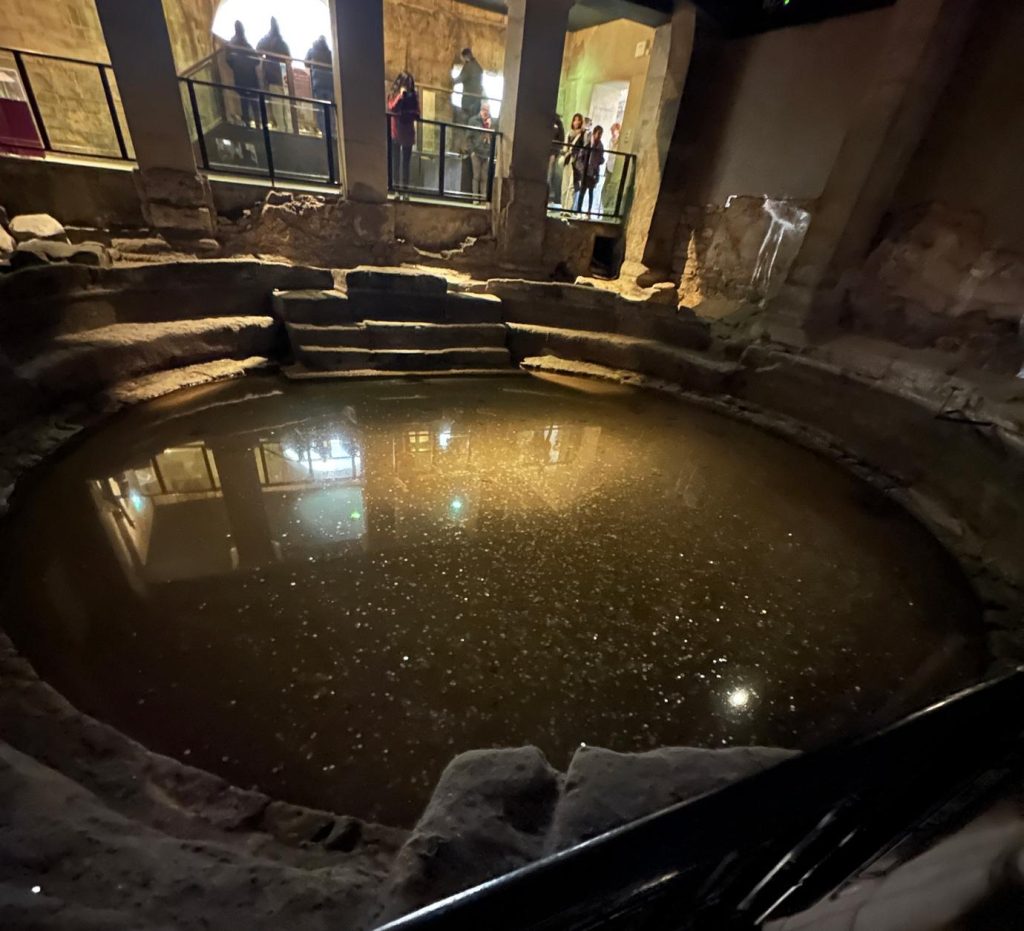
From certain angles, and in certain photographs, the laconicum at the Roman Baths looks convincingly like a cold plunge pool. It is circular, intimate, and has the hushed quality of something important. But the laconicum was not a cold plunge. It was a small room of intense dry heat — so fierce that it would produce a profuse sweat within a minute or two, after which you would be ready to receive treatment with oil and strigil.
In other words: it was a sauna. A Roman sauna. The laconicum — also called the sudatorium — was a chamber still hotter than the caldarium, used simply as a sweating room, said to have been introduced at Rome by Agrippa. It could also be converted into a steam room by splashing water on the heated walls, which means the Romans had, within the same complex, a dry sauna, a steam room, a hot pool, a warm room, and a cold plunge.
The cold plunge was the frigidarium. The sauna was the laconicum. Together, they formed a sequence of thermal contrast that the Romans had refined into a daily ritual — one that served not only the body but the social fabric of the city. In addition to the well-established health and hygiene benefits associated with bathing, regular visits to the baths had an important social function in the ancient Roman world: it was here that citizens might catch up with the latest news, transact business deals, or simply hang out with friends and colleagues.
And here is where the etymology becomes almost too good to be true. The word laconicum shares its root with a word we use every day: laconic. Both derive from Laconia, the region of southern Greece where Sparta was located — whose inhabitants were renowned throughout the ancient world for their verbal austerity and blunt, pithy remarks. The laconicum — the dry sweating room — took its name directly from the Laconians, because the sweat bath was a distinctly Spartan custom. So the Romans borrowed both the room and its name from a people who had, characteristically, already perfected it. When Philip of Macedon threatened, “If I enter Laconia, I will raze Sparta to the ground,” the Spartans’ entire reply was: “If.” It seems entirely fitting that a room designed for sitting in hot, wordless silence should be named after people for whom silence was a form of eloquence. Step into a laconicum and you are, etymologically at least, behaving exactly as a Spartan would.
The wellness studio and the social club, it turns out, were always the same thing.
The Engineering Underneath
The Romans’ hypocaust heating system was among the cleverest engineering features of their baths. The name means heat from below: a furnace room with wood-fired boilers was built at a lower level, heated air was sent through the space under the floor — raised on small brick pillars — and then the hot gases rose through hollow clay tubes embedded in the walls, carrying warmth all the way to roof level.
At Bath specifically, engineers drove oak piles into the mud to provide a stable foundation, then surrounded the spring with an irregular stone chamber lined with lead. The Great Bath is lined with forty-five thick sheets of lead and has been holding water for nearly two thousand years — a feat of practical engineering that speaks to a civilisation that built things not merely to impress but to endure.
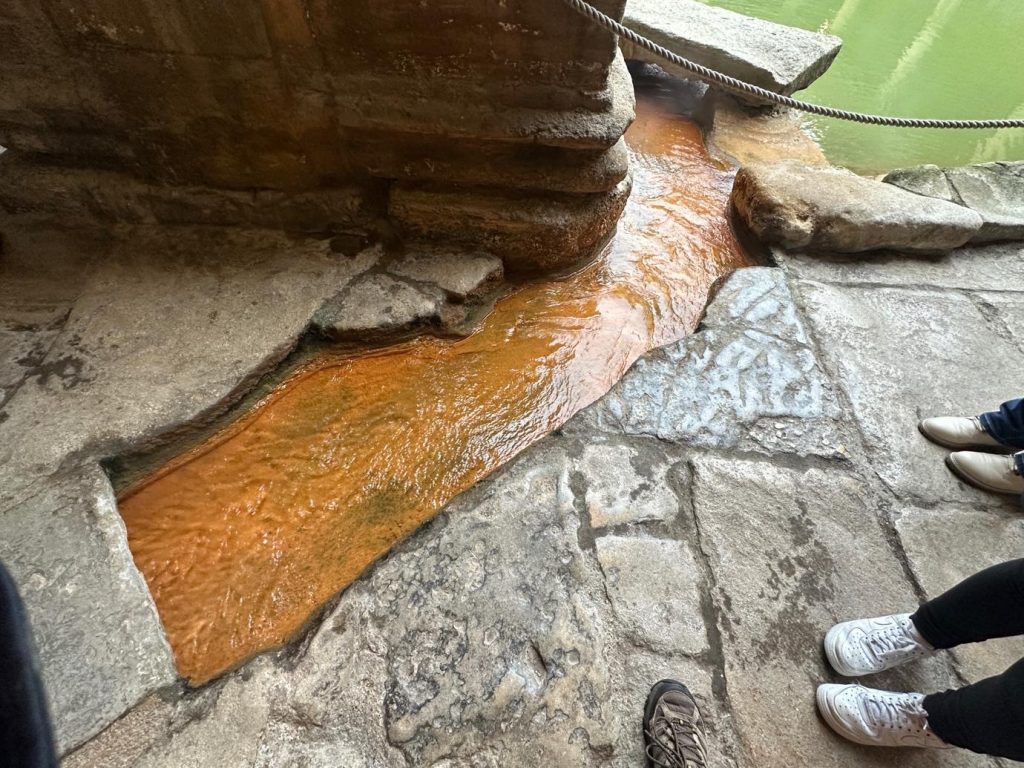
The thermal spring itself requires no engineering at all. It simply rises, as it has for ten millennia, heated by the earth, at a constant temperature, in a constant volume, entirely indifferent to the empires and fashions that have come and gone above it. The Celts honoured it. The Romans built around it. The Victorians rediscovered and excavated it. And now we stand here, in the twenty-first century, taking photographs of it with our phones, slowly realising that the people who came before us understood something important.
Rediscovering What Was Always Known
Here is what keeps turning over in my mind as I walk the circuit of the baths, past the thermal pools and the sauna room and the cold plunge, past the digital projections of Roman bathers flickering on the stone walls like cheerful, health-conscious ghosts: the Romans did not have our science. They did not have the language of vasodilation and vasoconstriction, of heat shock proteins or norepinephrine response. What they had was something arguably more impressive — a finely calibrated intuition about what the human body needed, refined over generations of careful observation, and the collective will to build entire cities around providing it.
Contrast therapy works by leveraging the body’s thermoregulatory mechanisms: heat induces vasodilation — expansion of blood vessels — and cold triggers vasoconstriction. Alternating between these states creates a vascular pumping effect that enhances circulation and supports inflammation control and pain modulation. We know this now because we have measured it, studied it, and published the results in peer-reviewed journals. The Romans knew it because generation after generation of Romans went to the baths, moved through the sequence of hot and cold, and came out feeling better — and drew the obvious conclusion.
Today, contrast therapy has surged in popularity, with its proven benefits for circulation, inflammation, and recovery driving the growth of dedicated wellness studios in cities, suburbs, and regional centres around the world. Cold plunge studios are opening in shopping strips across Australia. Infrared saunas are appearing in suburban wellness centres. The language is contemporary — the understanding is ancient. What we are witnessing is not invention but rediscovery: the gradual, science-assisted return to a body of knowledge that human beings once held intuitively and then, somewhere in the intervening centuries of industrial medicine and pharmaceutical innovation, set aside.

These are rituals that have been enjoyed and used as medicine, therapy, and community by cultures around the world for centuries — the Finnish sauna, the Japanese onsen, the Turkish hammam, the Roman thermae. Each arrived independently at the same understanding: that deliberate exposure to heat and cold, in sequence, is profoundly restorative. That the body responds not to comfort alone but to the intelligent application of challenge and recovery. That community and wellness are not separate pursuits.
What is genuinely exciting about the current moment is not that we have discovered something new. It is that we now have the scientific vocabulary to explain precisely why what the ancients knew intuitively is, in fact, correct. The Roman soldier who stepped out of the frigidarium feeling alert, clear-headed, and oddly euphoric was experiencing a measurable release of endorphins and norepinephrine. He simply called it feeling well. We are arriving, by a longer and more complicated route, at exactly the same place.
There is something humbling about standing here, in the steam above a spring that has been flowing since before recorded history, and realising that the gap between ancient wisdom and modern science is perhaps smaller than we imagined — and that the body, for all our sophistication, has always known what it needed.
Some things do not need inventing. They only need remembering.
Getting There
From London: Direct trains depart London Paddington regularly throughout the day on Great Western Railway, with the journey taking approximately ninety minutes. The station is a short, flat walk from both the Roman Baths and Bath Abbey. Book in advance for significantly cheaper fares.
By car: Bath sits just off the M4 motorway, roughly two hours from central London depending on traffic. Driving into the city centre is not recommended — parking is limited and the one-way system rewards patience. Park on the outskirts and walk, or use the park-and-ride services on the main approach roads.
From Bristol: Bath is fifteen minutes by train from Bristol Temple Meads, making it an effortless addition to any trip to Bristol. Services run throughout the day and are frequent.
From Cardiff: Just over an hour by train via Bristol, making Bath an excellent day trip from Wales.
The Roman Baths are located on Abbey Churchyard, directly beside Bath Abbey. Open year-round. Allow two to three hours minimum. The audio guide is narrated by Bill Bryson and is, unusually for an audio guide, genuinely worth listening to.
Thermae Bath Spa, a short walk away, allows you to actually bathe in the thermal waters — something the Roman Baths themselves no longer permit — including a rooftop pool with views over the city skyline. Book well in advance. It is an experience that requires no further justification beyond the fact that you will be doing, in a contemporary setting, precisely what human beings have been doing on this same spot for two thousand years.
The Romans, one feels, would approve.