
My daughter had been planning this day for the better part of a year. The pony bug had arrived in our household the way pony bugs tend to — quietly, then all at once — but this one came with a uniquely, gloriously specific fixation: she wanted to ride an Icelandic horse. Not just any horse. An “Icelandic” horse. And she wanted, very particularly, to experience something called the tölt — a word she could pronounce considerably better than I could, having spent the preceding months obsessed with YouTube muttering, “Dad. Watch. Watch how it doesn’t bounce.”
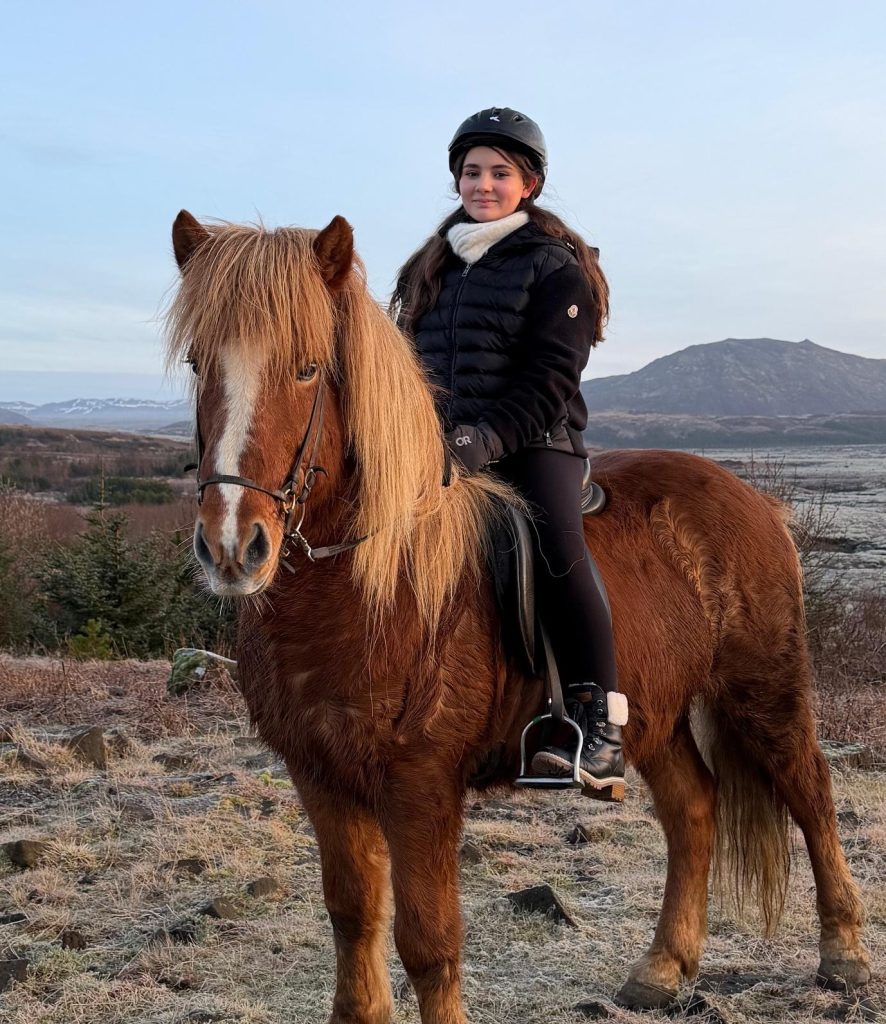
So when she finally felt it — when the chestnut mare beneath her shifted into that uncanny, uncannily-smooth fourth gear and her small body simply “stopped bouncing”, she went absolutely still in the saddle, turned to me with the wide-eyed reverence of a child whose long, patient research has at last been blessed by the universe, and whispered: “Dad. She’s doing it. I’m gliding!”
Reader, that is the tölt. And once you’ve felt it, no other horse will ever quite measure up.
We were 20 minutes by bus outside Reykjavík, somewhere in the lava fields beyond Hafnarfjörður, the wind doing that bracing Icelandic thing, arguing with you about which direction your jacket should face. My daughter was perched on a chestnut mare named (I’m probably butchering this) something like [HORSE NAME] — small, shaggy, and as concerned about the weather as a granite boulder, with the gentle, slightly amused expression of a horse who has seen tourists come and go for a thousand winters and concluded that we are, on the whole, mostly harmless.
We had arrived that afternoon at the stables of Ishestar, a horseback-riding outfit operating since 1982. The stables sit in a landscape that looks as though God ran out of ideas halfway through and started flicking lava around. The kit-out routine is brisk and unmistakably Icelandic: gloves, a helmet, boots, and an enormous, thick parka in a sober, practical, unmistakably Scandinavian dark grey — the sort of garment that turns each rider into an indistinguishable bundle of insulated humanity, after which it becomes genuinely difficult to tell who on the ride is anyone’s husband, wife, son or daughter. We were, briefly, a small, uniformed army of nondescript Michelin people, gender and silhouette and personal style all democratically erased by goose down. To this is added a polite-but-firm reminder that no, you cannot bring your own riding gear unless it has been disinfected to surgical standards. Iceland is, equine-disease-wise, a fortress, and they intend to keep it that way.
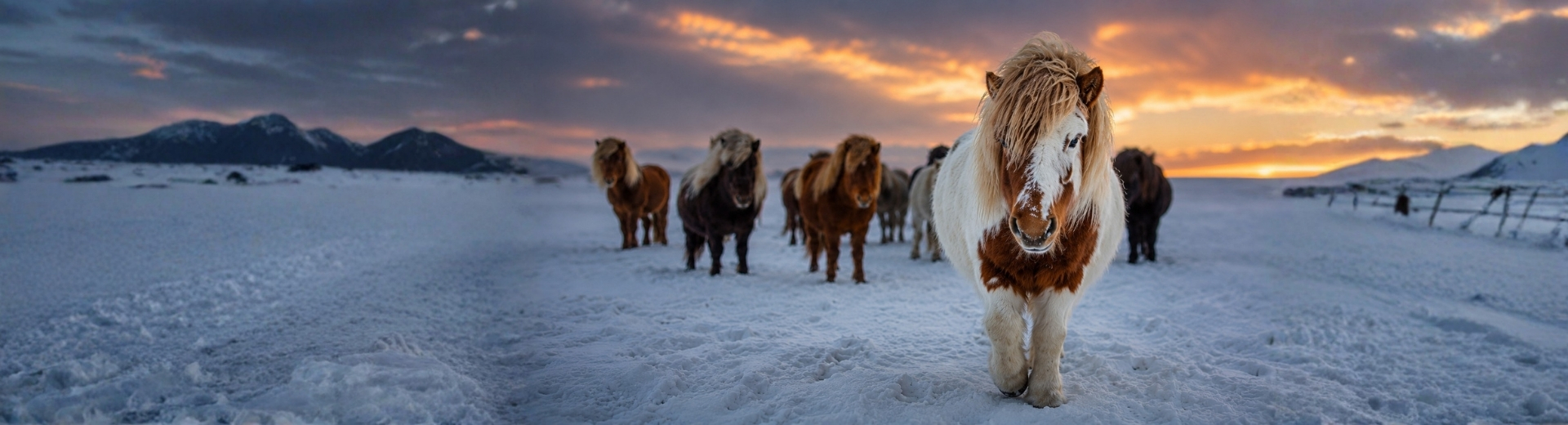
This protective instinct extends, beautifully, to the horses themselves. The Icelandic horse has been pure-bred on this island for more than a thousand years — Vikings brought their best stock between 860 and 935 AD, and since then the rule has been simple and unyielding: no horse comes in, and any horse that leaves can never return. A millennium of strict isolation has produced a horse with an unusually specific résumé: calm, sure-footed, genuinely friendly, and weather-hardy. They are built close to the ground, and surprisingly, they are incredibly warm when you run your fingers through their fur, even as you brush icicles off their outer edges.
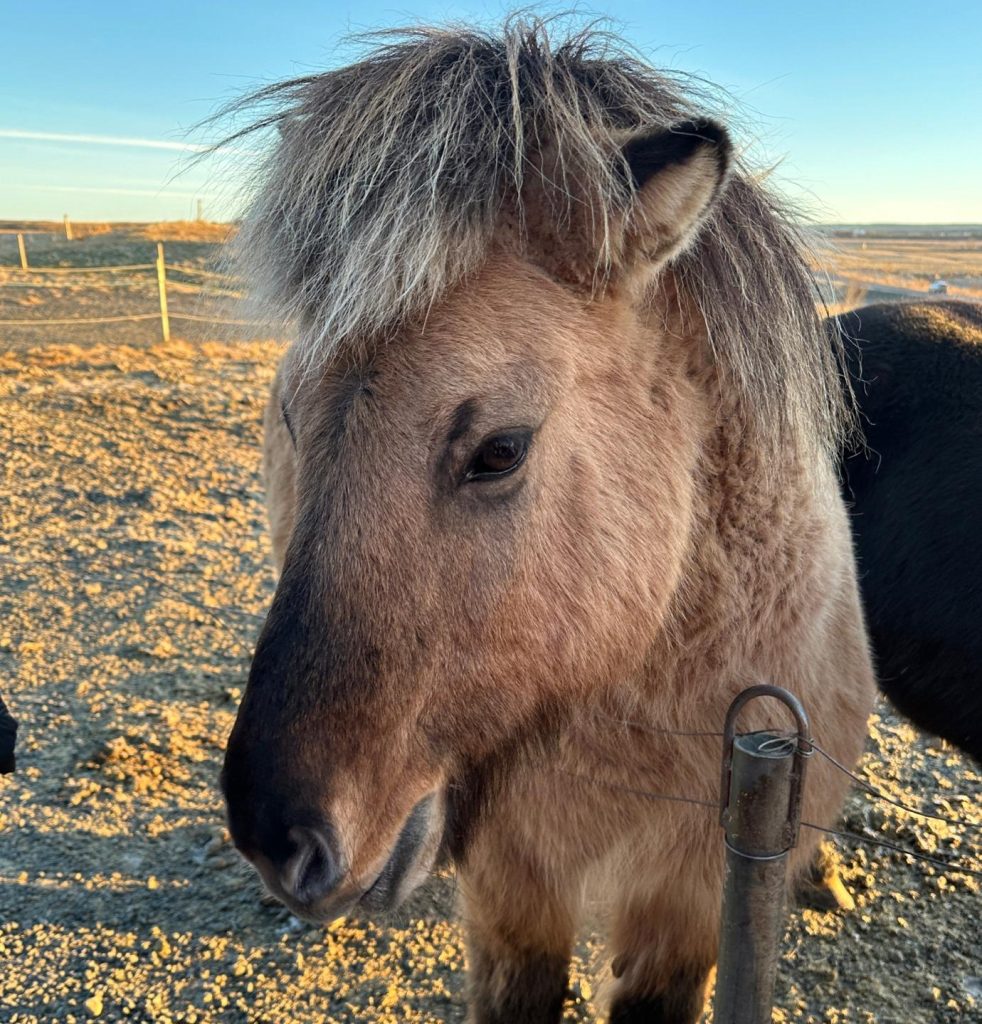
And, let me say this plainly, because it is the part that travel writing tends to be too cool to admit, they are adorable. Properly, ruinously adorable. They wander over to you in their paddocks with a curious, soft-nosed confidence, lean their fuzzy heads into your gloved hand, and look at you with an expression that suggests genuine interest in how your day has been going. Their nature is the real story here. A thousand years of careful breeding has produced a creature so even-tempered, so good-humoured, so quietly willing, that within ten minutes of meeting one, you have started privately reorganising your life around the possibility of one day owning one yourself.
Which means the small, fuzzy creature you are about to climb upon is, genetically, essentially the same horse the sagas were written about. There is something quietly profound about that.
But we are here for the gaits. Most horses have three: walk, trot, and canter. The Icelandic horse has five. Five. Like a manual gearbox built by a particularly enthusiastic Viking — and it is the fourth gear that does the witchcraft.
The tölt is, in industry jargon, a four-beat lateral gait, which is a polite way of saying one foot is always on the ground, so there is none of that bouncy airborne nonsense your spine has come to dread. Icelanders traditionally demonstrate it by riding whilst holding a full glass of beer and not spilling a drop. It can be ridden at a relaxed clop or flat-tack at near-canter speeds, and the rider’s bottom never leaves the saddle. Genuinely the smoothest thing I have ever experienced on four legs. My daughter described it as “sitting on a horse that’s secretly a hovercraft,” which is the best definition I’ve heard.
Then there is the fifth gear: the skeið, or flying pace — a two-beat lateral movement with all four hooves momentarily leaving the earth, at speeds approaching 48 kilometres an hour. Not all Icelandic horses can do it; those that can are the aristocracy of the breed, and Iceland holds proper races for them on long, straight tracks. We did not attempt the flying pace. I am a travel writer, not a Viking, although ancestry.com tells me I have Norse blood.
What we did do, gloriously, was tölt across an old lava flow blanketed in moss the colour of an unripe avocado, with the wind in our faces and a snow-streaked mountain off to the right wearing cloud like a poorly fitted scarf. This is the bit where Íshestar quietly distinguishes itself: the trail is not a tourist conga line of plodding ponies clipped nose-to-tail, but actual movement through actual landscape — lava fields here, frozen meadows and open countryside on other rides, and on the longer tours the otherworldly black-sand expanses of the south. You ride with the country, not at it. Our guide — a young woman with the kind of unflappable competence that makes you suspect she could deliver a foal whilst simultaneously making you a flat white — kept up a running commentary about the horses’ personalities. Íshestar matches riders to mounts with real care: beginners get the steady, sure-footed types; bolder hands get something with a little more zip. “This one is lazy. This one is the boss. This one thinks she is the boss but is actually fourth from the bottom. Do not tell her.” The Icelandic relationship with their horses is unsentimental and adoring at the same time, the way a good aunt loves her teenage nephews. Many people arrive in Iceland for the horse and leave having absorbed something rather larger — about its weather, its landscape, and the thousand-year conversation between this country and the animals that helped its people survive it.
These are properly photogenic horses. Long, wind-tossed forelocks like someone in a moody Scandi-noir trailer. Eyes that contain entire fjords. Expressions somewhere between philosophical and faintly affronted. If you have ever seen one of those mesmerising photographs of an Icelandic horse mid-tölt — mane and tail streaming, ankles disappearing into the snow — there is a decent chance it was taken by Gígja Einarsdóttir, a Reykjavík-based equine photographer whose work has appeared on H&M textiles, on canvases sold (somewhat improbably) in American Targets, and in her gorgeous 2013 book Horses of Iceland. She trained as a horse trainer before she trained as a photographer, and you can tell — the horses look at her camera the way they might look at someone they have known their whole lives. If you are going home with a single souvenir, make it one of her prints. The puffin keyring can wait.
By the end of two hours, my daughter had moved beyond mere obsession into the calm, fervent state of a young scientist whose hypothesis has been triumphantly proven. The pony bug, as we know in our household, is incurable. There is only a small girl, slightly cold-cheeked, looking up at her father and saying, with terrifying calm, “We need to investigate riding lessons when we get home.” Reader, we will be investigating.
Back at the stables, hands wrapped gratefully around complimentary mugs of hot chocolate — possibly the finest ever brewed, after a day’s frank discussion between wind and face — we said our goodbyes to [HORSE NAME] and the rest, with the small heartbreak peculiar to leaving an animal you have known for two hours and intend to remember for a lifetime.
What Do You Need to Know?
A few hard-won notes for the prospective rider. The first concerns weather: Iceland makes weather the way Italians make pasta — abundantly, with great variety, and often four kinds in a single afternoon. Íshestar provides the gloves, helmet, boots and the formidable grey parka, but you will want warm layers underneath and sturdy waterproof shoes for the walking-around bits before and after. Book ahead by a couple of days, particularly in summer. Maximum rider weight is 110 kilograms. You cannot bring your own gear unless it has been washed at 40°C and disinfected — Íshestar will walk you through it.
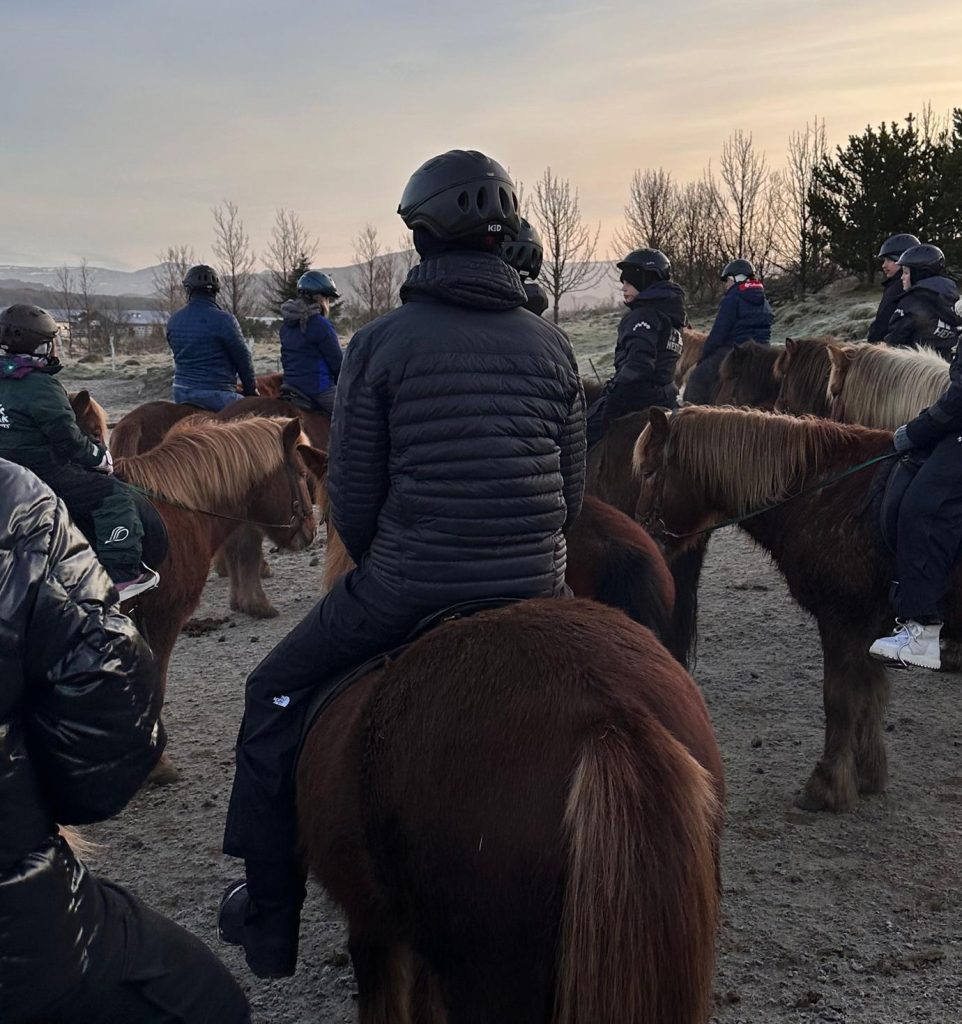
Match the tour to your appetite. The Lava Tour we took is cleverly designed: it splits into two groups on the trail, a slow walking group for absolute beginners and small children, and a faster group that gets to try the trot and the tölt at proper pace. Which means it works for an entire family at once — confident riders chasing pace, the small and tentative cruising on patient autopilot, everyone reuniting at the stables for hot chocolate. Experienced riders hungry for longer stretches and more tölt will be happier on multi-day expeditions, which run through the summer into the highlands, the East Fjords, and along the black-sand beaches of Snæfellsnes — where you can tölt for kilometres beside the North Atlantic with glaciers glittering off your shoulder.
A small bonus for IAP readers: Íshestar have offered ten per cent off both the Lava Tour and the Waffle Tour — yes, that one ends with a waffle, because Iceland understands what cold travellers actually need. Use the code ICEHORSES10 at booking. The waffle, I am reliably informed, is excellent.
But honestly, all you need to know is this: somewhere out in those lava fields, a small girl from Sydney met a small horse from Iceland, and the world rearranged itself slightly. The Vikings, for all their many and well-documented sins, got this part right. They brought a horse with five gears and a thousand years of patience — and a temperament so disarming that you find yourself, an hour after dismounting, still thinking about a fuzzy face leaning into your hand. They kept it pure for us. The least we could do was show up.